
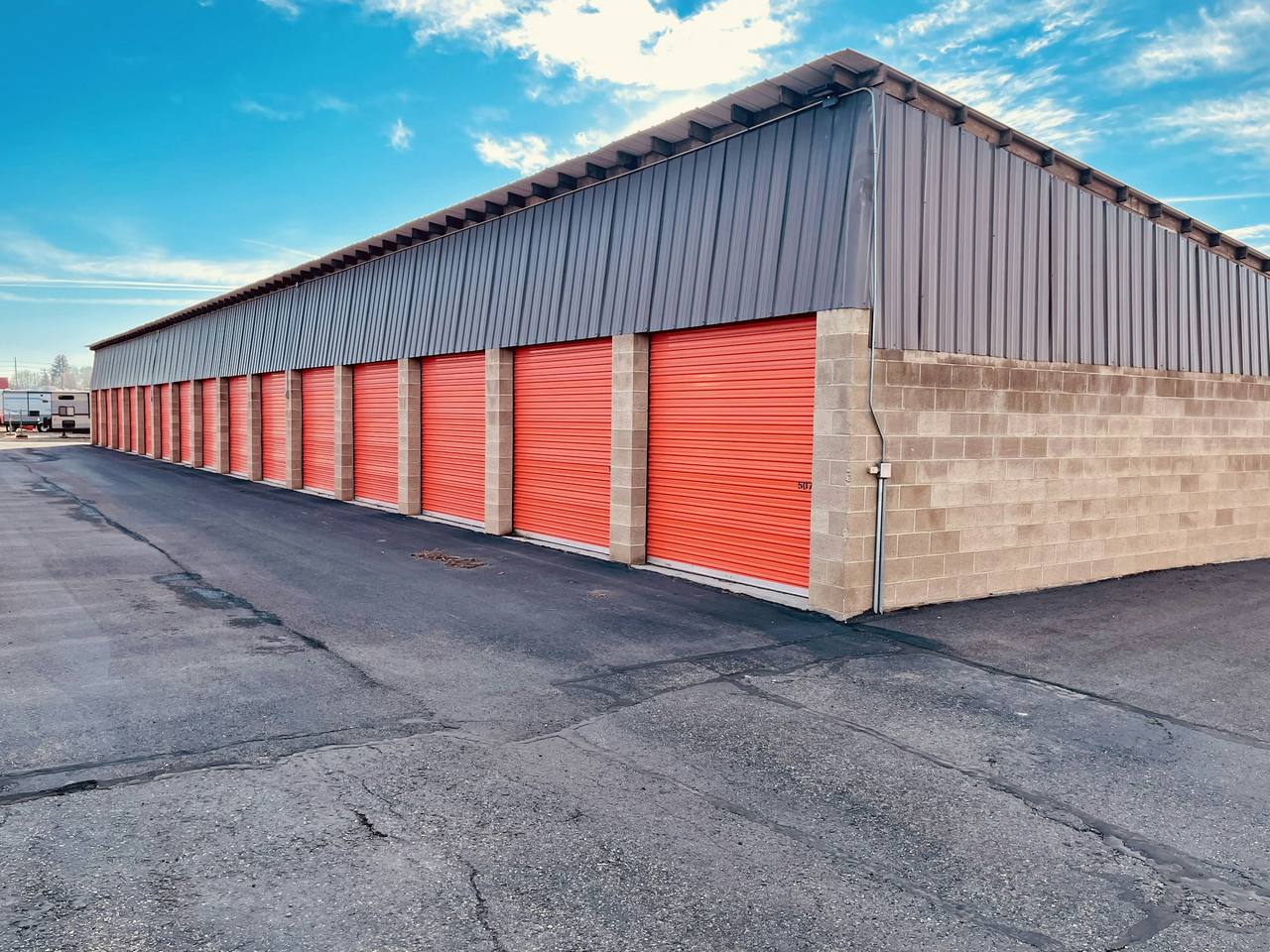
Property types
Storage
In brief: Storage property takes three main forms: self-storage facilities, industrial storage buildings and industrial outdoor storage. We represent owners, investors and operators on sales and leases of all three.
Self-storage
Facilities that rent individual units to households and businesses, either climate-controlled, drive-up or a mix. Value follows location, unit mix, occupancy, rental rates, operating expenses, management and nearby supply. We review the operating history and the competing facilities before we recommend a price.
Industrial storage buildings
Warehouse and flex space used mainly for storage by contractors, businesses and operators, including small-bay buildings divided into units. These overlap with industrial and flex and are underwritten on clear height, power, doors, tenant mix and replacement cost.
Industrial outdoor storage (IOS)
Yards used to park or store trucks, trailers, equipment, containers and materials. IOS has its own page: Industrial outdoor storage.
What we check on any storage property
- Zoning and permitted use, and whether expansion is allowed.
- Access, visibility and truck or vehicle circulation.
- Stormwater, surface and site condition.
- Operating or lease history, and who manages the property.
- Nearby supply that competes for the same customers.
- Replacement cost for the same type of space.
How we approach it
We prepare a pricing analysis from comparable sales and leases and from replacement cost, and we identify the buyers or operators most likely to transact. A pricing analysis is not an appraisal. We do not operate storage facilities.
Our focus is Sumter County and Lake County; see all markets.
Send a storage property for pricing analysis
A pricing analysis is not an appraisal.
FAQ
What counts as storage property?
Self-storage facilities, industrial storage buildings and industrial outdoor storage. We represent clients on all three.
How is self-storage priced?
Price follows its operating history, unit mix, occupancy, rental rates and expenses, its location, and competing facilities nearby, compared with comparable sales and replacement cost. We prepare a pricing analysis, which is not an appraisal.
What is the difference between IOS and self-storage?
IOS is mainly outdoor yard space for vehicles, equipment and materials, often leased to a business. Self-storage rents individual units, indoors or drive-up, to many customers. See IOS.
Do you represent buyers and sellers of storage properties?
Yes. We represent owners selling, investors and operators buying, and landlords and tenants leasing storage space.